

I have experienced the most amazing thing: a complete misunderstanding. Actually, many, many misunderstandings. It’s amazing how misunderstandings happen and how often they happen. Let me give you an example: I wanted something from my husband and let him know (I’ll spare you the details…just assume I’m right). My husband responded with what I would describe as a retort and his response grated at me as I left for work. There was really only one way to understand what he had said, and it was mean. It was clearly punishment for what I had wanted from him. And I seethed and seethed about it.
Luckily, I spent several hours at work before I returned home so the seething had declined in intensity. Nevertheless, I was still angry so I brought up his comment and told him what I thought about it (perhaps it’s not shocking that I had many thoughts about it). My husband’s response was utter confusion; he had no idea what I was talking about. Again, sparing you tedious details, suffice it to say we went over the situation again, this time explaining the intent behind our requests.
At first, I didn’t believe my husband. I had already decided there was only one explanation for his response—the mean one. But now he was telling me his intent was different, not warm exactly, but at least neutral. My mind had to shift from what felt like a fact to a new possibility. This is the challenge of being in relationship with other people – they don’t think the same things as I do…
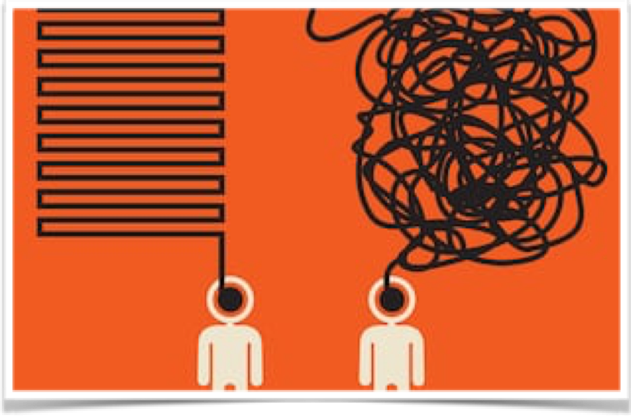
This experience—something I see repeatedly in my office—reminds me of the power of misunderstandings. A misunderstanding happens when we perceive someone’s communication differently, often more negatively, than they intended. It happens all the time, and it can deeply damage relationships.
Misunderstandings happen everywhere—between spouses, siblings, parents and children, coworkers, church members, and friends. They are especially common in important relationships when stress is high and our fight-or-flight response is already activated. Because we often interpret things negatively, we either defend ourselves or shut down, and walls begin to form.This process takes milliseconds.
The only way to catch it is if we slow things down.
If you’re really angry or if you have thrown up the wall, try to catch a misunderstanding before it becomes a full-blown explosion, consider:
- Is this person typically evil or malicious? (This is a softball – they probably aren’t evil or you wouldn’t be in relationship with them.)
- Is what you are feeling a common feeling to you? (e.g. attacked, ridiculed, unseen)
- Are your thoughts common thoughts to you? (e.g. “I’m never enough!” or “I’m not important to him and I’ll never be important!”)
- Is this person important to me?
- Am I under any stress at all?
If your answered “no” to question number 1, and if you answered “yes” to any of questions 2-5, there may have been a misunderstanding. Here’s a way to untangle yourself:
- Pause.
- Do something active to get those stress hormones out of your blood stream.
- Take a deep breath.
- Ask the person what they meant by what they said or did or didn’t say or didn’t do.
- Then – here’s the really hard part – listen. Really pay attention to what they are saying. You might have to have them repeat it a few times. That’s ok. It’s part of slowing down.
It’s hard to believe that we could have misunderstood someone so drastically, but it’s possible. Slow it down, and find out if there was an intent you could not even imagine. It’s possible.